

You can switch to proposal software without losing a single client. Finish any active proposals on your current system first. Set up the new tool properly before going live. Run both systems side by side for a few weeks. Send a short message to clients who are expecting a renewal. When each of these steps is followed in order, clients receive their next proposal through the new system without any disruption.
The firms that experience losing clients when switching software are the ones that do it without a plan, in the middle of active proposals, with no communication. Getting the timing right and keeping clients informed throughout the process removes most of the risk before it arises.
Key Takeaways
- The biggest risk when switching proposal software is not the technology. It is the absence of a clear client communication plan before and during the transition.
- Switching in the middle of active proposals is the most common cause of client confusion. Timing the switch after existing proposals are resolved dramatically reduces disruption.
- Accounting firms that run both systems side by side, keeping the old one live while onboarding to the new one, report significantly smoother transitions and zero client loss.
- Most clients do not care which software you use to send a proposal. They care that the proposal is clear, professional and easy to sign. The right tool makes that easier, not harder.
Seven Steps to Safely Switch to Proposal Software
The steps below work regardless of where you are starting from. You might be moving from a tool that is no longer working for your firm. You might be setting up a proper proposal system for the first time.
Whatever your starting point, the steps are the same. Follow them in order and give yourself enough time at each stage.
Step 1: Audit Your Current Situation
Before you change anything, get a clear picture of your current position.
How many proposals are currently out with clients waiting to sign? How many clients are in the middle of a proposal cycle? What data do you need to carry across?
Having clear answers to these questions shows you the right moment to switch. Knowing your exact number of active proposals before switching prevents you from moving at the wrong time.
Step 2: Choose the Right Timing
The best time to switch between proposal software is when the number of active proposals is at its lowest.
The start of a new month gives your team a clean point to begin. The period just after a renewal cycle closes or the end of a financial quarter also works well. January is a poor time to switch because accounting firms typically have a high number of client deadlines and renewal proposals running during that month.
Allow a two-week setup window before the first live proposal goes out from the new system.
Step 3: Set Up and Test the New System Before Going Live
Build your service library, pricing structure and proposal templates in the new tool before any client sees it.
Send test proposals to yourself and a trusted colleague. Check everything. The goal is to feel completely confident before you use it with a real client.
A good accounting proposal software will have a free trial period that allows you to test without any commitment. Outbooks Proposal offers a one-month free trial, giving accounting firms enough time to set up properly, test thoroughly and go live only when ready. Tools that support automated proposals also save your team significant time from day one, so it is worth testing that feature during the trial period as well.
Step 4: Run Both Systems Side by Side
Keep your old system live for two to four weeks while using the new one for all new proposals.
Existing clients whose proposals are still pending complete the cycle without any interruption. New prospects and renewals go through the new system.
This overlap period is the single most effective step in any software move and it is the one most firms skip.
Step 5: Communicate the Change to Existing Clients
Most clients only need to know that a change has happened when it directly affects something they are waiting for. If a client is expecting a renewal proposal or has previously signed through your old system, send them one short message before the next proposal arrives.
“We have moved to a new proposal system. You will receive your next proposal through it shortly. It is simple to sign and nothing changes on your end.”
That is all most clients need to hear.
Step 6: Migrate Your Client and Pricing Data
Accounting software migration is simpler than most firms expect. When you migrate to proposal software, the data transfer rarely takes more than a few hours. Most accounting proposal software tools allow you to import client lists via CSV directly from your accounting software. Xero, QuickBooks and Sage all support this.
Do this before going live. Set up your standard service packages and pricing tiers so that the first proposal you send from the new system is polished and consistent. Good automation software will also carry your pricing structure across to every future proposal automatically, removing the need for manual input each time.
Step 7: Close Down the Old System When You Are Ready
Once all active proposals are resolved and no clients are mid-cycle, cancel or pause the old tool. Do not rush this step. There is no benefit to removing the old system before you are fully comfortable with the new one.
The Three Concerns Firms Have About Switching Proposal Software
The three most common concerns accounting firms have about switching proposal software are client disruption, client confusion and data loss. Each one has a direct and practical answer.
- The first concern is that active proposals will be disrupted: Active proposals only get disrupted when a firm switches before those proposals are closed. Completing all unsigned proposals on the current system before moving to the new one removes this risk entirely.
- The second concern is that clients will be confused: Clients are rarely confused by a software change when the firm communicates it clearly. A single short message, sent to clients expecting a renewal, is enough. Most clients will simply receive their next proposal through the new system without any issues.
- The third concern is that historical data will be lost: Client contact details, service descriptions and pricing structures can be exported from most proposal tools as a CSV file and imported into the new system within a few hours. Signed historical proposals are rarely needed again once the engagement has begun.
What Accounting Firms Should Look for in Proposal Software?
Accounting firms need accounting proposal software that handles engagement letters, consistent pricing and professional templates as standard. A general business tool will not cover these by default. Here are the five things to check before choosing a replacement.
Designed for Accounting and Bookkeeping Firms
Look for software for accountants that includes engagement letter generation, tiered pricing packages and templates designed for professional services firms. Proposal automation software built specifically for accountants will handle these as standard features.
Low Setup Time
A tool that takes weeks to configure is not practical for a firm that needs to keep sending proposals during the switch. The right accounting proposal software should be ready to use within hours of setup.
Consistent Pricing Structure
The software should allow you to build a standard pricing structure that every member of your team follows. Inconsistent quoting across the team is one of the main reasons firms look to replace proposal software in the first place.
Integrated Engagement Letters
Generating a separate engagement letter after a proposal is accepted adds an unnecessary step. The right tool generates the engagement letter automatically once the proposal is signed.
Automated Proposals and Payment Collection
Automation software that handles both proposal generation and payment collection removes two of the most time-consuming manual tasks in any accounting firm. Look for a tool that sends automated proposals and collects payment automatically once the proposal is approved, rather than leaving the follow-up to your team.
Conclusion
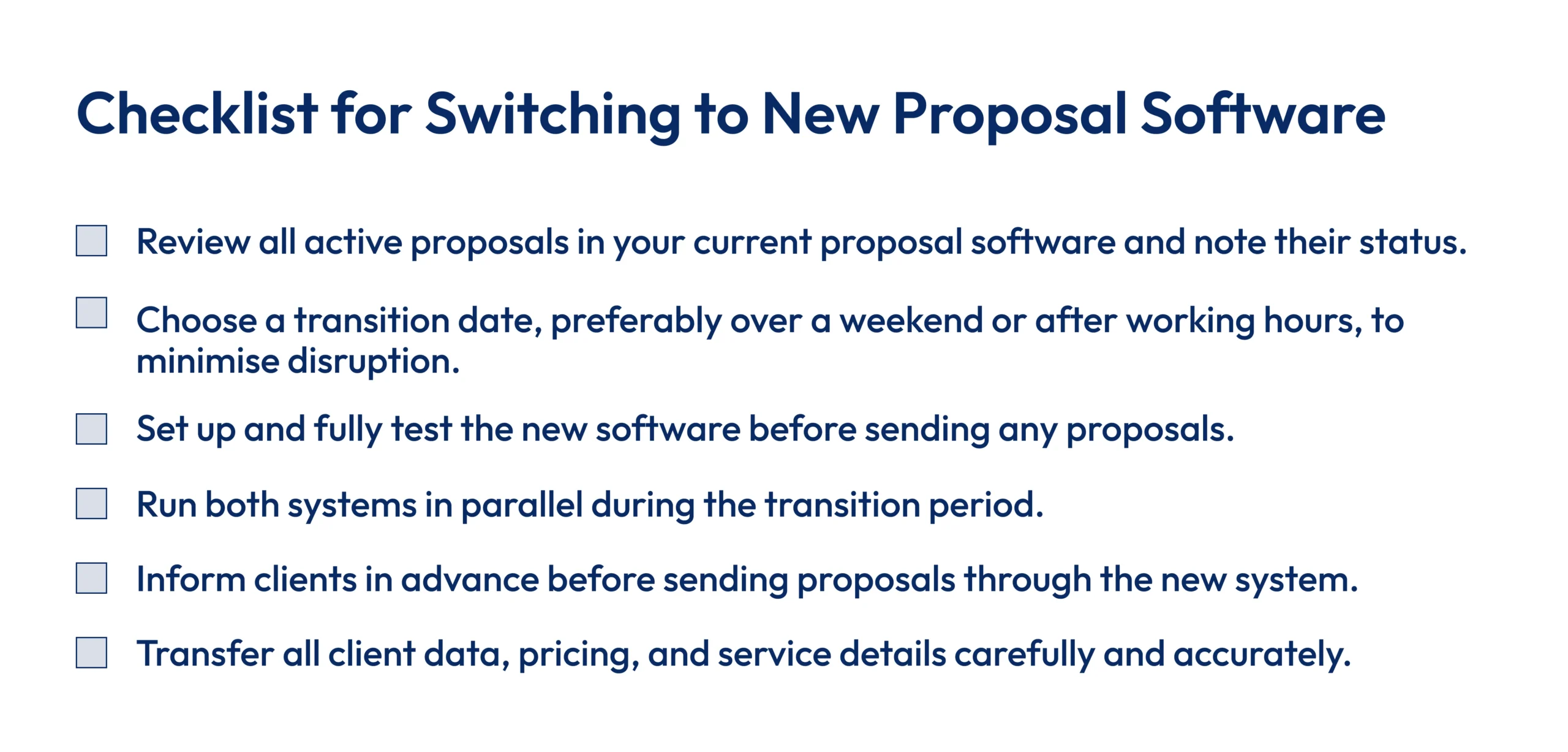
Switching proposal software goes smoothly for firms that follow the right order. They close active proposals first, set the new system up fully and tell the right clients before the next proposal arrives.
Keep the old system running until all proposals are signed. Set up the new system fully before you send the first live proposal. Tell any client who is expecting a renewal what to expect. Do those three things and the switch will go through without any problems.
Outbooks Proposal gives accounting firms a one-month free trial so you can set everything up, test it properly and go live only when you are confident.
FAQs
How do I switch to proposal software without losing clients?
Finish all unsigned proposals on your current system before moving anything across. Run both systems side by side for two to four weeks so no client is left mid-cycle. Send a one-line message to any client expecting a renewal so they know what to expect when the next proposal arrives.
Will my clients notice if I change proposal software?
In most cases no, what clients notice is whether the proposal they receive is clear, professionally presented and ready to sign.
What happens to active proposals when I switch software?
Complete any proposals already sent through your old system using that same system. Move new proposals and renewals to the new tool once the overlap period begins.
How long does it take to set up new proposal software for an accounting firm?
Most tools are ready to send live proposals within one to two days, provided your pricing structure and service list are prepared in advance.
What is the easiest proposal software to switch to for accounting firms?
Outbooks Proposal is built specifically for UK accounting and bookkeeping firms, with engagement letter generation, automated proposals and a one-month free trial, making the switch straightforward and low risk.
What are the biggest mistakes accounting firms make when switching proposal software?
Switching in the middle of active proposals, skipping the overlap period and not informing clients who are expecting a renewal are the three most common errors.

Parul is a content specialist with expertise in accounting and bookkeeping. Her writing covers a wide range of accounting topics such as payroll, financial reporting and more. Her content is well-researched and she has a strong understanding of accounting terms and industry-specific terminologies. As a subject matter expert, she simplifies complex concepts into clear, practical insights, helping businesses with accurate tips and solutions to make informed decisions.