
![How to implement a three-tier pricing strategy for accounting services [+ proposal templates]](https://outbooks.com/proposal/wp-content/uploads/2024/12/How-to-implement-a-three-tier-pricing-strategy-for-accounting-services-proposal-templates.png)
Clear and fair pricing attracts suitable clients, especially with a three-tier pricing method. This method highlights your skills even before potential clients start working with you. A three-tier pricing model provides clients with flexibility and clarity, balancing their choices with perceived value.
Instead of using a single price for all services, a three-tier system presents clients with three distinct options. These options typically include Basic, Standard, and Premium. This structure allows clients to select the option that best fits their needs and financial situation. As a result, your services become both accessible and valuable. A well-prepared proposal can help build trust and accelerate decision-making.
What is a three-tier pricing strategy in accounting?
A three-tier pricing strategy in accounting is a service packaging model where firms offer three structured options typically Basic, Standard, and Premium, each providing increasing levels of service scope, support, and strategic value to match different client complexity levels.
Grasping a Three-Level Pricing Approach
A three-level pricing approach is a straightforward way to display your services in three or more categories. You can use terms like Basic, Standard, and Premium, or even Bronze, Silver, and Gold, depending on what suits your brand best. Each level meets different client needs, providing clear choices based on their budget and objectives. This arrangement not only gives options but also fosters trust. Clients can easily understand what they get at each level, whether they seek basic services or a complete package.
By providing various service levels, you demonstrate flexibility and openness. You show that you can adapt as your clients grow. This strategy helps clients realise that you can cater to their needs at every step of their journey.
In practice, accounting firms frequently align pricing tiers with client complexity rather than purely service volume. Sole traders, growing SMEs, and established limited companies often require different compliance intensity, reporting depth, and advisory access, making tiered structuring operationally logical as well as commercially effective.
Why a Three-Tier Pricing Approach is Effective
A three-tier pricing structure offers a good mix of flexibility and simplicity. Clients see three clear choices, making it easier for them to decide without feeling confused or pressured. This setup often leads clients to select the middle or top tier, where the added benefits are attractive. This is usually where the most value is provided.
This model also simplifies the explanation of differences between each tier. When clients understand what they gain by moving up a tier, their decision becomes clearer.
Having tiered options can speed up the decision-making process and lessen lengthy discussions. With a well-defined three-tier model, you can often anticipate which options will attract clients, increasing your confidence in closing deals.
From an accounting firm perspective, tiered pricing also improves capacity planning and profitability forecasting. When services are productised into defined packages, teams can better estimate delivery effort, standardise workflows, and reduce margin erosion caused by inconsistent scoping.
Important factors for a three-tier pricing approach
Recognise client requirements
Understand that clients have different needs at various stages of their journey with you. Some clients may want a basic service, while others might need comprehensive support. Each pricing tier should address these diverse requirements, ensuring that clients find a suitable option.
Distinguish essential services from additional features
Identify the fundamental services that every client should receive and separate these from premium services. The basic tier should cover the necessary services, while the mid and top tiers should provide additional features that save time or offer unique advantages.
Clarify the value of each tier
Clearly communicate what clients will receive by selecting a higher tier. The basic tier includes essential services, the mid-tier adds convenience or support, and the top tier includes all available services. Clients should easily understand the benefits of each level.
Maintain simplicity
Typically, three tiers work best for professional services: Basic, Standard, and Premium. This structure offers clients enough options without complicating their decision-making process. Having too many tiers can confuse clients, while too few may feel restrictive.
Evaluate profitability and efficiency
Each tier should be priced to cover your costs while delivering strong value to clients. Ensure that each level justifies the time and resources required and that pricing reflects your expertise and service quality.
Provide options for customisation
Clients value having choices. While each tier should be clearly defined, consider offering a few customisable add-ons to meet specific needs. This flexibility allows clients to tailor their experience within a structured framework.
Consider regulatory workload differences
When designing accounting pricing tiers, compliance intensity should influence package structure. Requirements such as Making Tax Digital submissions, VAT scheme complexity, payroll reporting obligations, and Companies House filing responsibilities often vary significantly between clients and should be reflected in service layering.
How UK Accounting Firms Commonly Structure Three-Tier Packages
UK accounting firms often map pricing tiers to business maturity stages rather than arbitrary service bundles. A typical segmentation approach includes:
| Tier | Typical client type | Core services |
|---|---|---|
| Basic | Sole traders | Bookkeeping, year-end accounts |
| Standard | SMEs | VAT, payroll, management reporting |
| Premium | Scaling firms | Advisory, forecasting, CFO-style support |
This approach ensures that pricing progression mirrors operational complexity, improving client understanding and internal delivery consistency.
Creating your pricing packages: How to develop an effective three-tier pricing strategy for proposals
Once you have established a solid tiered pricing model, the next step is to create a clear proposal. A tiered proposal presents clients with various service levels, helping them choose based on their budget and requirements. It guides clients through each option in an understandable manner. The Basic tier is a good starting point; the Standard offers a balance of value and support; and the Premium includes all services.
A well-structured proposal template assists in presenting this model effectively. It helps clients grasp what they will receive at each level. A three-tiered proposal template simplifies the process by providing predefined service levels that can be quickly adjusted to meet client needs. This method reduces back-and-forth communication, speeds up decision-making, and clearly showcases your services.
To be effective, a three-tiered proposal must feature a clear layout, distinct service levels, and concise presentation.
Step-by-Step Framework to Implement Tiered Pricing
- Segment your client base by complexity and advisory requirements
- Define core services required across all engagements
- Layer compliance and advisory services progressively across tiers
- Establish service boundaries, response times, and support expectations
- Validate pricing against delivery cost and team capacity
- Pilot the model within new proposals before wider rollout
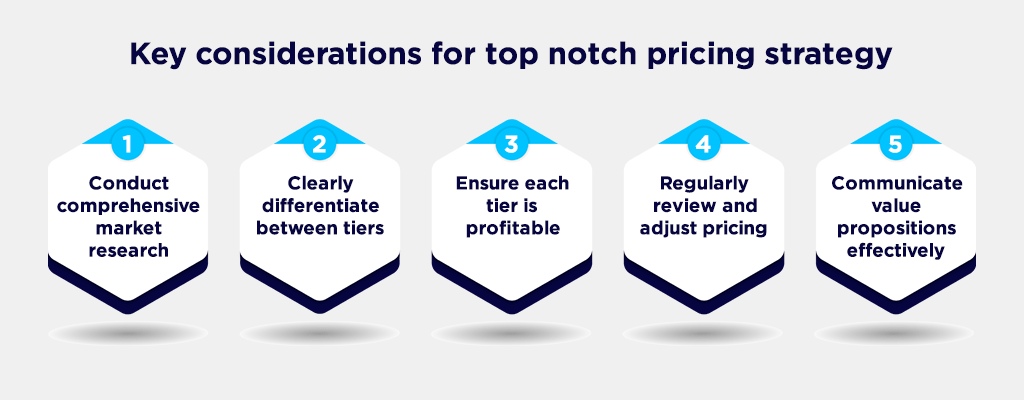
Essential Components of a High-Converting Tiered Proposal
Here are the essential elements of a tiered proposal structure for professional services:
Clear value statement
The value statement is the first aspect clients encounter. It should be direct and impactful. Start with a sentence that conveys the outcome you will deliver—a clear promise that highlights the benefits of choosing your services.
Summary overview
The summary overview should demonstrate your understanding of the client’s objectives. Use this section to highlight key insights into their needs and set the tone for how your services provide focused solutions.
Various service levels
Providing clients with choices between Basic, Standard, and Premium levels allows you to meet diverse needs and budgets without sacrificing clarity. Each level addresses different client priorities, illustrating how your services can support them throughout their journey.
- Basic: This economical option includes core services—ideal for clients who need quality but are budget-conscious. The Basic tier allows clients to experience your expertise with an opportunity to upgrade later.
- Standard: This mid-level option offers additional value without the full cost of Premium. It shows your commitment to their success with added benefits, where many clients find an optimal balance between support and cost.
- Premium: For those seeking complete assistance, Premium is the all-inclusive package. Here, you can showcase your expertise and provide comprehensive solutions that meet all their requirements.
Execution plan
Outline a clear roadmap that informs clients about what to expect as you collaborate. Break down your process into straightforward steps to show that you are organised, proactive, and focused on results.
Balanced content
Provide just enough information to create clarity without overwhelming clients. Keep each section brief yet informative, offering sufficient detail to demonstrate the value you provide without inundating them with specifics.
Options for customisation
Every client is unique, so your proposal should reflect this diversity. Highlight opportunities for tailoring services based on client feedback. This flexibility ensures your solution aligns with their specific needs and enhances your competitive edge.
Operational Reality: Challenges When Implementing Tiered Pricing
Accounting firms adopting tiered pricing frequently encounter practical challenges such as:
- Scope creep when clients expect premium responsiveness within basic plans
- Partner hesitation when moving away from familiar hourly billing
- Internal workflow standardisation requirements
- Client education around service inclusions and boundaries
Successful firms typically mitigate these risks by defining service SLAs, upgrade triggers, and communication protocols within each tier.
Why Tiered Pricing Improves Accounting Firm Profitability
Cause: Undifferentiated pricing treats clients with varying complexity equally
Impact: Margin pressure, unpredictable workloads, underpriced advisory time
Solution: Tiered packaging aligns revenue with effort, improving delivery efficiency and financial predictability
When Should Accounting Firms Consider Moving to Tiered Pricing?
Firms commonly transition to tiered pricing when they experience:
- Increasing advisory demand without pricing evolution
- Proposal discussions becoming lengthy and inconsistent
- Frequent misunderstandings around service scope
- Capacity constraints despite stable revenue growth
- A strategic objective to productise services for scalability
At this stage, structured packaging can improve client clarity, team efficiency, and commercial consistency.
Three-Tier Pricing Design Checklist
- Clearly defined service inclusions
- Compliance workload considered
- Delivery capacity validated
- Upgrade pathway visible
- Proposal presentation simplified
- Profitability tested per tier
A well-designed three-tier pricing strategy not only improves client clarity but also enables accounting firms to deliver consistent value, standardise delivery, and scale advisory capacity without operational friction.
FAQs
How do accounting firms decide what goes into each pricing tier?
Firms typically analyse client complexity, compliance workload, advisory needs, and support expectations before grouping services into progressive packages.
Does tiered pricing work for small accounting practices?
Yes. Smaller firms often benefit significantly because tiered pricing reduces negotiation time and helps standardise delivery across clients.
Can existing clients be moved to a tiered pricing model?
Yes, but firms usually introduce tiered pricing during annual reviews or when service scope changes to avoid client friction.
Should advisory services only sit in premium tiers?
Not always. Many firms include limited advisory access in mid-tier packages to demonstrate value and encourage premium upgrades.

Parul is a content specialist with expertise in accounting and bookkeeping. Her writing covers a wide range of accounting topics such as payroll, financial reporting and more. Her content is well-researched and she has a strong understanding of accounting terms and industry-specific terminologies. As a subject matter expert, she simplifies complex concepts into clear, practical insights, helping businesses with accurate tips and solutions to make informed decisions.