
Managing your business finances doesn’t have to be overwhelming. Whether you’re running a startup in Austin, a growing company in Houston, or an established business in Dallas, finding the right bookkeeping partner can transform how you handle your money.
Texas offers a wide range of professional bookkeeping services to help you stay organized, save time, and make better financial decisions.
Key Takeaways
- Texas has nearly 3 million active businesses, creating strong demand for professional bookkeeping services.
- Outsourced bookkeeping typically costs $250-$2,500 monthly, significantly less than hiring full-time staff.
- No license is required to practice bookkeeping in Texas, but certifications add credibility.
- Professional bookkeepers now focus on analysis and advice rather than just data entry.
- Small businesses make up 99.8% of Texas companies and employ 44% of the state’s workforce.
- Cloud-based technology allows bookkeepers to work remotely while providing real-time access to your financial data.
Why Texas Businesses Choose Outsourced Bookkeeping?
Texas is growing fast. According to the Texas Secretary of State, as of February 2025, Texas has 2,964,180 active business entities, almost double the 1.47 million in 2015. This growth means more businesses need reliable outsourced bookkeeping services.
The Value of Professional Help
When you work with professional bookkeepers, you get expert help without the cost of hiring full-time staff. According to the U.S. Bureau of Labor Statistics, bookkeeping clerks manage financial records using software, spreadsheets, and databases to maintain organized and accurate records.
What Services Are Included?
Professional bookkeeping services in Texas typically include:
- Recording and organizing all transactions
- Matching bank and credit card statements
- Managing bills you need to pay
- Tracking the money customers owe you
- Creating monthly financial reports
- Processing payroll for employees
- Getting records ready for taxes
- Planning budgets and forecasts
Major Cities for Bookkeeping Services
Texas has several big cities with strong business communities. Each city has different industries, from Houston’s energy companies to Dallas’s financial firms and Austin’s tech startups. This means you can find bookkeepers who understand your specific type of business.
Houston: Energy Capital and Business Hub
Houston has many different types of businesses, which creates strong demand for accounting services in Houston. You’ll find many accounting firms in Houston options that work with energy companies, healthcare providers, and manufacturers. Local Houston bookkeeper professionals know Texas rules and can help businesses of all sizes.
Bookkeeping options in Houston range from small firms offering personal attention to larger teams with specialist expertise. Many bookkeeping services providers and accounting services Houston tax firms now work online, so you can access good bookkeeping service Houston no matter where you’re located. Whether you need a bookkeeper in Houston for basic help or full bookkeeping services in Houston for complex needs, you have plenty of choices.
Dallas: Finance and Technology Center
Dallas is a major center for finance and tech companies. The Dallas bookkeeper community includes both traditional firms and modern online operations. Whether you need bookkeeping services downtown or in the suburbs, Dallas tax bookkeeping providers can work with you in person or remotely.
Many bookkeepers in Dallas focus on specific industries like retail, professional services, real estate, or technology. The many bookkeeping services Dallas available means you can find providers who really understand your industry and local market.
Understanding Pricing and Investment
Bookkeeping costs depend on your business size, how many transactions you have each month, and what services you need. Most providers are upfront about their fees.
Cost Breakdown by Service Level
| Service Level | Monthly Cost | Best For |
|---|---|---|
| Basic | $250-$500 | Under 50 monthly transactions |
| Standard | $500-$900 | $250K-$1M revenue businesses |
| Premium | $900-$2,500 | Over $1M revenue or complex needs |
What to Ask About Fees?
When comparing bookkeeping services in Dallas or any Texas accounting firms, ask about:
- Setup fees for new accounts
- Software costs
- Extra charges for catching up old work
- Year-end closing fees
Good providers tell you everything upfront so there are no surprises.
Choosing the Right Bookkeeping Partner
Finding the right provider takes some research. Your bookkeeper will see your financial information and help you make important decisions, so it’s worth taking time to choose carefully.
Industry Experience Matters
Look for providers who know your type of business. A bookkeeper in Dallas who works with retail stores is different from one who helps construction companies or professional services. Industry knowledge means they understand your specific challenges and needs.
Technology and Software Skills
Make sure they know your accounting software like QuickBooks Online, Xero, or FreshBooks. Many offer CPA bookkeeping services that work smoothly with tax software. This makes sharing information easier and keeps everything in one place.
Communication Style
Choose teams that respond quickly and explain things in plain English without confusing terms. You should feel comfortable asking questions and getting clear answers.
Ability to Grow With You
Pick providers who can grow with you as your business gets bigger. You don’t want to switch bookkeepers every time you expand.
Security and Location
Working with U.S.-based providers keeps your financial information protected under American laws. This matters for your data security and legal protection.
Outsourced vs. In-House Bookkeeping
This is an important decision for Texas business owners. Handling bookkeeping in-house typically takes 8–15 hours per week on financial tasks. That’s time you could spend making sales or improving your business.
Benefits of Outsourcing
Professional outsourced accounting Houston services give you:
- Expert help without paying for full-time staff
- Fewer mistakes that cost money
- More time for your main business work
- Services that adjust as you need them
- Access to modern software and tools
- Less worry about tax and legal rules
When Outsourcing Makes Sense?
When thinking about accounting outsourcing services or accounts outsourcing, ask yourself: do you want to focus on what you do best, or spend time on back-office paperwork? For most business owners, outsourcing is the smarter choice.
Texas Licensing Requirements
Many people ask: Do bookkeepers need a license in Texas? No, they don’t. You don’t need a license from the Texas State Board of Public Accountancy to provide bookkeeping services or prepare financial statements.
Professional Certifications
But certifications do help show expertise:
- Certified Bookkeeper (CB) from the American Institute of Professional Bookkeepers
- Certified Public Bookkeeper (CPB) recognized nationwide
- QuickBooks ProAdvisor for software skills
These aren’t required by law, but they show the bookkeeper stays current with training and follows professional standards when you’re looking at bookkeeping services in Texas.
Industry Changes and Job Outlook
The bookkeeping field is changing because of technology. The Bureau of Labor Statistics says bookkeeping jobs will drop 6 percent from 2024 to 2034 as software takes over tasks like data entry and basic record matching.
What This Means for Businesses?
But there will still be about 170,000 job openings each year, mostly from people retiring or changing careers. Bookkeepers now do more analysis and give advice. The BLS notes that as software handles routine work, bookkeepers focus more on reviewing financial records and finding ways to save money or work better.
This is good news for businesses because you get more value from professional services than ever before.
Small Business Impact in Texas
Small businesses are the heart of Texas’s economy. The Texas Comptroller of Public Accounts reports small businesses employ 44% of Texas workers – that’s 5.1 million people. And 99.8% of all Texas businesses are small businesses.
Finding the Right Provider for Small Businesses
When looking for small accounting firms in Houston, a Houston small business accountant, or a Houston outsourced accounting firm, look for:
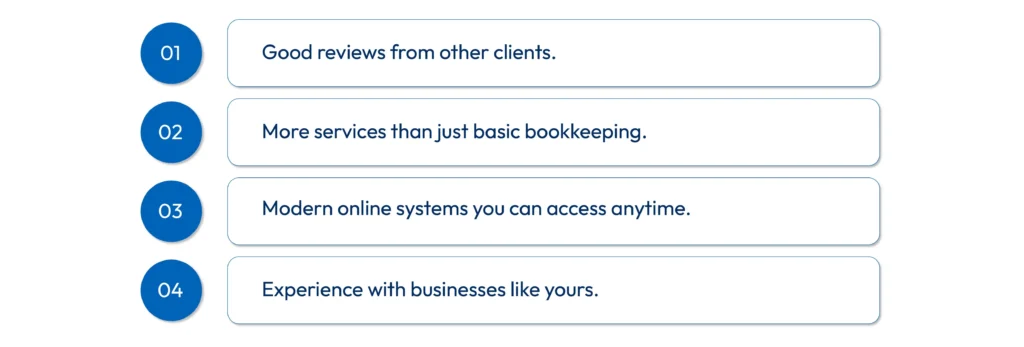
The right outsourced bookkeeping services provider in Dallas or Houston understands both the technical work and the real challenges small businesses face in Texas.
Advanced Services Beyond Basic Bookkeeping
As your business grows, you may need more than basic bookkeeping. Larger businesses often need strategic financial help to plan for growth and stay competitive.
Note: Bookkeeping focuses on daily financial records, while accounting includes tax planning, reporting, and strategic advice. Many providers offer both under one service.
Controller and CFO Services
Advanced services from outsourced bookkeeping companies for CPA firms include:
- Controller services for managing finances and planning
- CFO advisory for big-picture strategy and decisions
- Tax planning to reduce what you owe
- Financial analysis to understand profits better
- Audit support when you need financial reviews
When to Upgrade Services?
These services fill the gap between daily record-keeping and the strategic money management that helps businesses grow. If you’re making over $1 million in revenue or planning major expansion, these services become more important.
Technology Changes in Bookkeeping
Technology has changed how bookkeeping works. The Bureau of Labor Statistics notes that as companies move to computer-based financial records, bookkeepers need to know accounting software, spreadsheets, and databases.
Cloud-Based Tools and Benefits
Modern bookkeeping services Dallas and across Texas use online tools that give you:
- Access to your financial data anytime, anywhere
- Automatic downloads from your bank
- Easy sharing with your bookkeeper and CPA
- Strong security to protect your information
- Automatic backups so you never lose data
Popular Software Options
Most Texas bookkeeping providers work with popular programs like QuickBooks Online, Xero, FreshBooks, and Wave, so they’ll work with whatever system you use.
Steps to Find Your Bookkeeping Partner
With almost 3 million active businesses in Texas according to the Texas Secretary of State, good providers stand out through their skills, technology, and service.
Whether you want bookkeeping services in Houston, bookkeeping services near Houston or Dallas bookkeeping help, or providers anywhere in Texas, follow these steps:
- Figure out what you need now and later
- Research providers and check their reviews
- Talk to several firms for free consultations
- Ask detailed questions about costs and how they work
- Start with basic services and add more as you go
Don’t rush. The right bookkeeping partner becomes a trusted advisor who helps you make better money decisions and reach your business goals.
Request a consultation with a Texas-based bookkeeping expert.
Conclusion
The bookkeeping field keeps changing as technology handles more routine tasks. This helps Texas businesses get better insights at good prices. Quality bookkeeping services in Texas give businesses the financial foundation they need to succeed. With Texas leading the country in business growth, good financial management matters more than ever.
Professional Texas bookkeeping services keep you organized, help you follow the rules, and give you useful information whether you’re just starting out or running an established company. Investing in professional outsourced bookkeeping services pays off through better understanding of your finances, less stress, and more time for what you do best.
Don’t let bookkeeping problems slow you down. Look at your options, talk to providers, and find the right partner to help you grow. Your business deserves the solid financial foundation that professional bookkeeping provides.
Frequently Asked Questions
How much should I expect to pay a bookkeeper?
How much should you pay a bookkeeper per month?
Is it a good idea to outsource bookkeeping?
What makes outsourced bookkeeping services worth the investment?
Do bookkeepers need a license in Texas?

Parul is a content specialist with expertise in accounting and bookkeeping. Her writing covers a wide range of accounting topics such as payroll, financial reporting and more. Her content is well-researched and she has a strong understanding of accounting terms and industry-specific terminologies. As a subject matter expert, she simplifies complex concepts into clear, practical insights, helping businesses with accurate tips and solutions to make informed decisions.