
The wrong accountant costs your business thousands through missed deductions and penalties. IRS data shows failure-to-file penalties reach 5% per month, with minimums of $525 for late returns.
Whether you’re searching for questions for an accountant to evaluate their expertise or wondering how I find an accountant who fits your needs, asking the right questions before hiring prevents costly mistakes from poor bookkeeping, incorrect business structures, and absent financial planning.
This guide helps small businesses and startups choose the right accountant or CPA before hiring.
Key Takeaways:
- Ask strategic questions first to identify accountants who drive growth, not just compliance
- Use these questions for an accountant to clarify fee structures and communication standards, avoiding hidden costs and frustration
- Verify service scope and technology capabilities to ensure year-round support
- Confirm professional credentials last, after establishing they understand your business needs
Questions About Strategic Advisory and Business Growth
Start here. These questions to ask a CPA or accountant reveal whether they’ll help your business grow or simply file paperwork. When considering how to pick an accountant, strategic value matters more than credentials alone.
What Financial Mistakes Do You See Businesses Like Mine Make?
This single question provides immediate value while testing their industry knowledge. Strong accountants might discuss:
- Cash flow management failures that cause business closures
- Common missed deductions specific to your industry
- Poor timing of major purchases that waste tax benefits
- Incorrect business structures can cost thousands annually
Listen for specific, concrete examples rather than vague generalizations. Their answer shows whether they understand businesses like yours and can explain complex topics clearly. These small business questions to ask your accountant help evaluate their practical experience.
Which Financial Metrics Should I Monitor, and How Will You Help?
Every business needs performance indicators beyond basic profit and loss. The right metrics vary by industry:
- Retail businesses: Inventory turnover, gross margin percentage, sales per square foot
- Service companies: Accounts receivable aging, billable utilization, revenue per employee
- Contractors: Job costing accuracy, work-in-progress balances, overhead recovery rates
Ask how they’ll help you track these numbers and what good performance looks like. This question helps you find a good accountant for my business who provides ongoing guidance, not just annual tax filing.
How Do You Use My Financial Data to Find Growth Opportunities?
Accountants who regularly analyze your numbers spot patterns affecting profitability. They should identify:
- High-margin products or services worth expanding
- Expense categories growing faster than revenue
- Seasonal trends useful for planning and cash management
- Performance gaps compared to industry benchmarks
Request specific examples of how they’ve helped similar clients improve profitability. These questions help separate strategic advisors from basic bookkeepers.
Do You Provide Proactive Tax Planning or Just Tax Preparation?
Tax preparation reports what happened last year. Tax planning looks ahead to legally minimize your burden through strategic decisions about equipment purchases, retirement contributions, business structure, and timing of income and expenses.
Ask how often they review your finances outside tax season and whether they reach out with suggestions before opportunities expire. When learning how to select a tax accountant, these questions to ask a tax advisor are critical because proactive planning saves far more than reactive compliance. Questions to ask CPA about taxes should focus on their planning approach, not just filing competence.
Questions About Fees and Communication Standards
After confirming strategic capabilities, address practical concerns about cost and contact. These questions to ask when hiring an accountant prevent the disputes that ruin most client relationships.
How Do You Structure Your Fees, and What Triggers Extra Charges?
Get complete transparency about pricing:
| Pricing Model | Best For | Hidden Cost Risks |
|---|---|---|
| Hourly Rate | Complex situations, one-time projects | Disorganized records, extra questions, amended returns |
| Flat Fee | Standard tax returns | Business complexity, multi-state filing, audit support |
| Monthly Retainer | Ongoing bookkeeping and advisory | Services outside agreed scope |
Ask specifically what causes additional charges beyond the base fee: disorganized paperwork, IRS notices, amended returns, or consultations outside agreed meetings. Knowing this upfront helps you budget accurately.
How Often Will We Communicate, and Through What Channels?
Communication frequency matters more than most realize. Discuss:
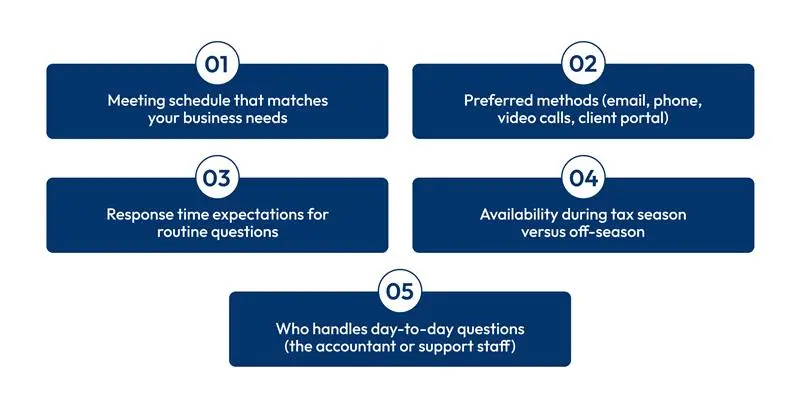
Regular contact prevents year-end scrambles and keeps finances on track. When choosing an accountant for small business finances, match their communication style to your preferences.
What Do You Need from Us to Provide the Best Service?
Good relationships require effort from both sides. Your accountant might need:
- Organized receipts delivered by specific monthly dates
- Regular uploads of bank and credit card transactions
- Timely responses to questions during tax preparation
- Access to accounting software and financial accounts
- Notification of major business changes or large transactions
Understanding expectations helps you maintain a productive partnership and receive maximum value. These questions to ask accounting firms establish mutual accountability from the start.
Questions About Services and Technology
Once you’ve confirmed strategic value and practical compatibility, verify they can handle your operational needs. These questions to ask a bookkeeper or full-service accountant clarify exactly what you’re paying for.
Which Services Are Included in Your Base Fee?
Avoid surprise bills by clarifying what’s covered:
- Monthly bookkeeping and bank reconciliation
- Annual tax preparation and filing (federal and state)
- Quarterly estimated tax payment calculations
- Payroll processing and payroll tax deposits
- Sales tax collection, reporting, and filing
- Financial statement preparation
- Year-round tax planning consultations
- IRS correspondence and audit support
Many business owners ask an accountant about services only to discover critical functions cost extra. Get the complete list upfront.
What Accounting Software Do You Use, and Will You Help Me Set It Up?
Modern accountants work with cloud-based platforms like QuickBooks Online, Xero, or FreshBooks. Ask:
- Which software they support and recommend for your business
- Whether they provide initial setup and chart of accounts customization
- If training on basic functions is included
- How they handle ongoing software support and questions
Proper software setup prevents categorization errors that create problems during tax preparation. This is an essential question to ask a tax accountant about year-round efficiency.
How Do You Protect My Financial Data?
Data security protects sensitive information about revenue, expenses, and business strategies. Professional accountants should use:
- Encrypted file sharing and secure client portals
- Two-factor authentication for all account access
- Regular data backups stored in secure locations
- Staff cybersecurity training and clear confidentiality policies
If an accountant seems casual about security or can’t explain their protocols, consider it a serious warning sign.
Questions About Professional Qualifications
Only after confirming strategic value, clear communication, and operational capabilities should you verify credentials. These questions to ask a CPA ensure they meet professional standards and help you understand how to choose the right accountant for your specific needs.
What Certifications Do You Hold?
Ask about CPA (Certified Public Accountant) or EA (Enrolled Agent) credentials. CPAs have passed rigorous state examinations and maintain continuing education. EAs hold federal licenses to represent taxpayers before the IRS. These certifications confirm professional competence and ethical standards.
How Much Experience Do You Have in My Industry?
Industry-specific expertise makes a tremendous difference. An accountant familiar with your sector understands common deductions, regulatory requirements, financial benchmarks, and seasonal patterns. Ask how many clients they serve in your industry and what specific tax considerations apply to your business type.
Can You Provide References from Similar Clients?
Request contact information for two or three current clients whose businesses resemble yours. When speaking with references, ask about response time, quality of advice, success finding deductions, and overall value received. These conversations reveal how accountants perform in real situations.
This sequence of questions starting with strategic value and ending with credentials helps you select an accountant who truly supports your business growth, not just someone with impressive letters after their name.
Conclusion
Asking the right questions for an accountant transforms the hiring process from guesswork into strategic decision-making. Start with questions about growth opportunities and tax planning, clarify fees and communication expectations, verify technology capabilities, and confirm credentials last.
This approach helps you choose an accountant who functions as a true business partner, saving far more through proactive planning than they cost in fees. Use these questions to ask an accountant to find someone who understands your industry and can drive your business forward.
Frequently Asked Questions
What are the most important questions to ask an accountant?
How do I find an accountant for my small business?
What should I ask a CPA when starting a business?
What should I look for when hiring an accountant?
When do I need an accountant for my business?
How many accountants should I interview before hiring one?
Is a CPA always better than a non-CPA accountant?
Should startups hire an accountant before earning revenue?
Can an accountant help beyond taxes?

Parul is a content specialist with expertise in accounting and bookkeeping. Her writing covers a wide range of accounting topics such as payroll, financial reporting and more. Her content is well-researched and she has a strong understanding of accounting terms and industry-specific terminologies. As a subject matter expert, she simplifies complex concepts into clear, practical insights, helping businesses with accurate tips and solutions to make informed decisions.